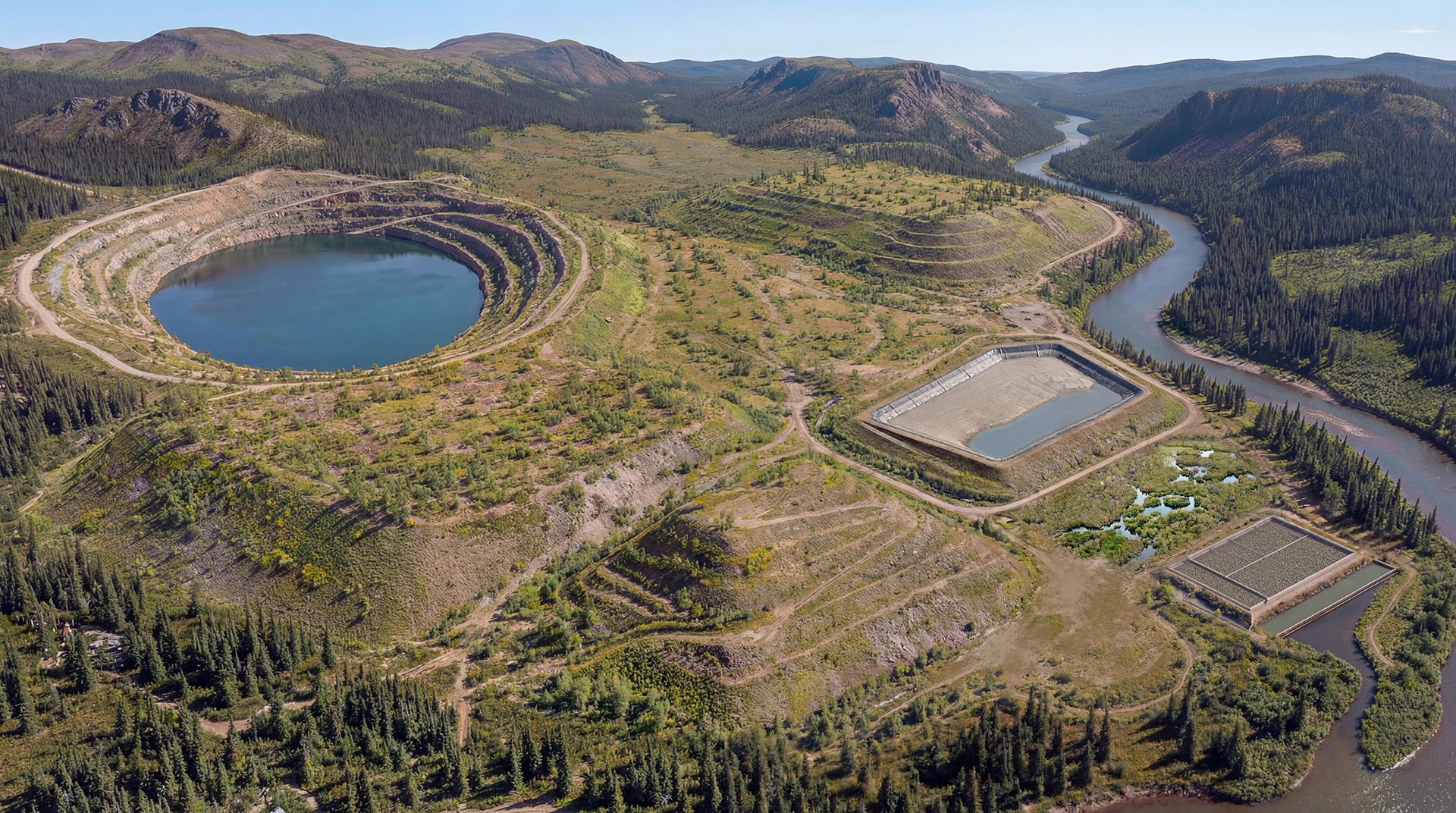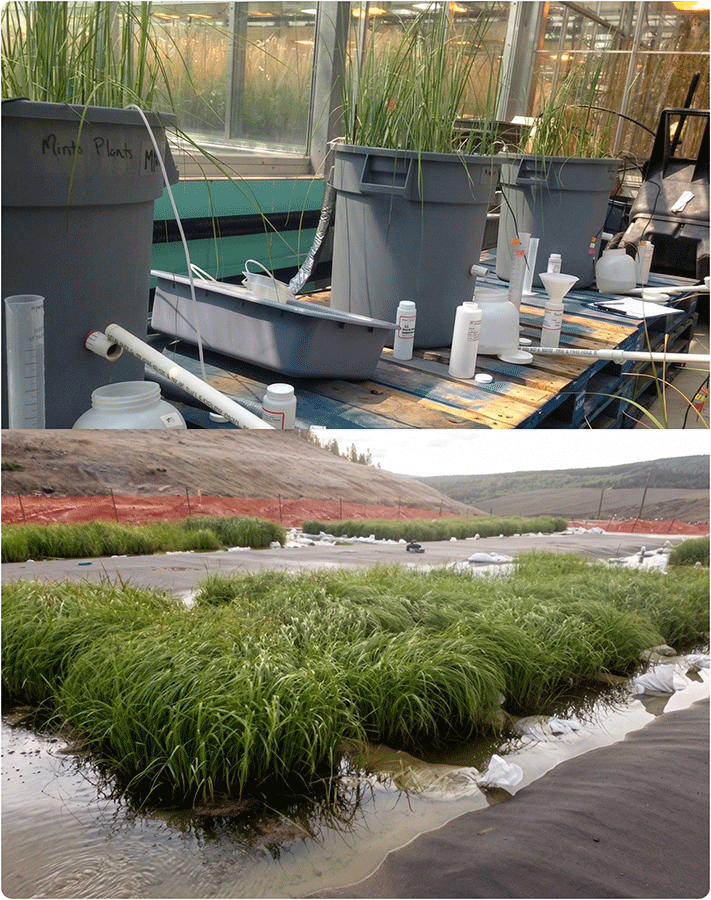
Bench and pilot testing of a constructed wetlands treatment system to prove viability of long-term passive water treatment system post-closure.
HIGHLIGHTS
Long timelines and uncertain futures.
Water management strategies built to be robust and adaptable.
Changes in site conditions — climate change and permafrost.
Change in requirements — discharge standards, change in law governing process and requirements.
Change in stakeholders’ expectations — local/provincial, federal, First Nations.
CASE STUDY
Closures happen years to decades after concepts are developed and cost expectations are set. Physical and political conditions change, making the probability of closing according to plan low. Once initiated, closure process may take years to decades to complete. Therefore, water management strategies built around analytical tools like predictive models can imagine and test future scenarios. Early use of integrated water management models can be used to show that water management strategies are robust and resilient to change when garnering license to operate in permitting. Later, sensitivity analysis should inform final closure planning and provide contingency options that allow adaptation to changing conditions without sacrificing efficacy or risking the loss of license to proceed toward an endpoint.